
Why "lighter = stronger" is costing you sends
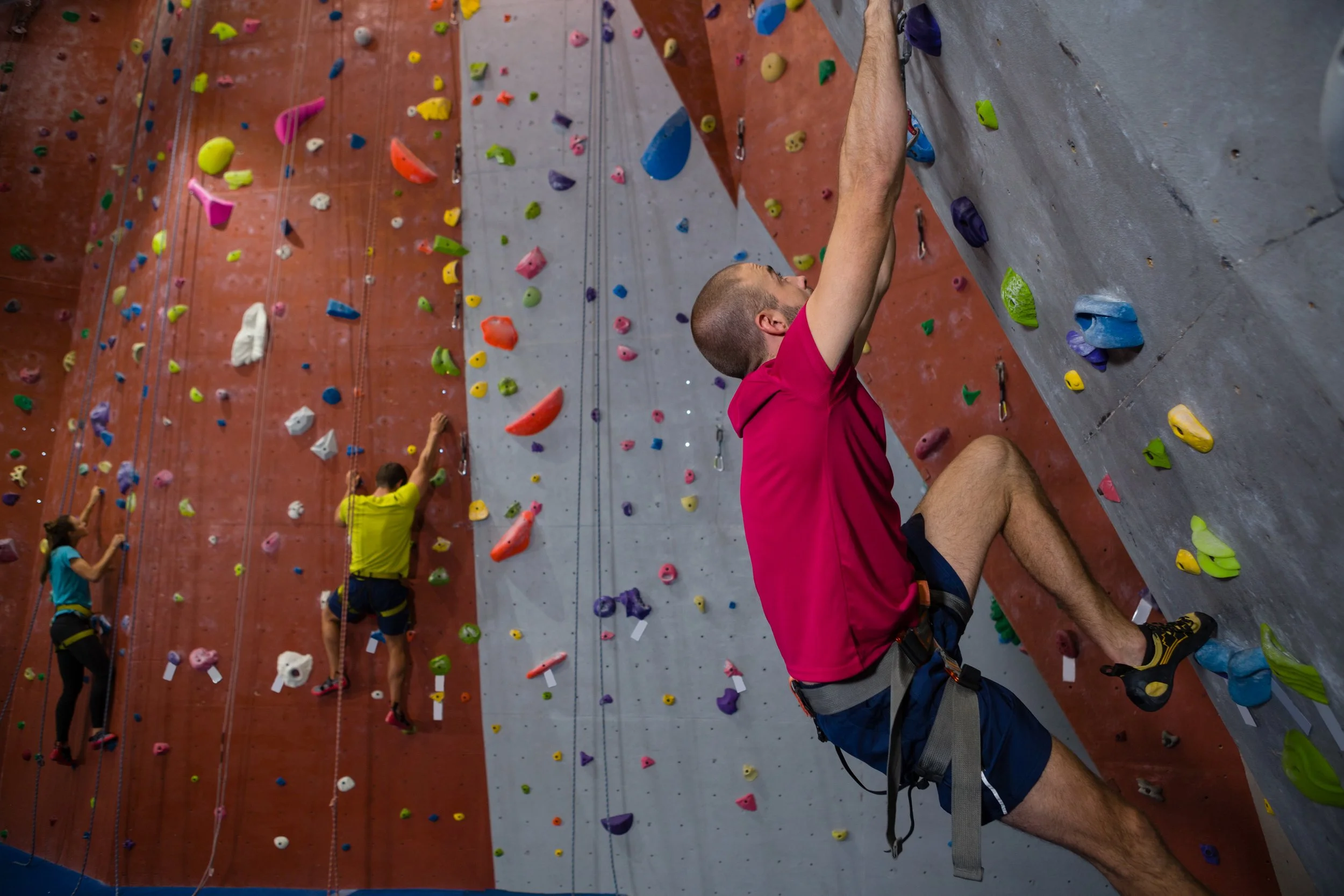
There's an idea that's been passed around climbing for decades, at crags and comps and in gym locker rooms, usually framed as harmless common sense: climbing is strength-to-weight, so if you want to climb harder, get lighter.
It sounds like math. It isn't. And it's probably the most expensive myth in the sport, measured in plateaus, injuries, and people quietly falling out of climbing altogether.
What the "equation" leaves out
Strength-to-weight is real physics, but treating your body like the denominator misses how the numerator actually works. Strength isn't a fixed number you carry around. It's produced, session after session, by a body with enough fuel to train hard, adapt, and recover.
Under-fuel that system and the whole engine winds down. Power fades. Recovery slows. Tendons and bones, the parts of a climber that take months to build and seasons to heal, lose the raw materials they repair with. Focus and psych go too, because your brain runs on the same fuel budget as your forearms.
Sports medicine has a name for where this road ends: RED-S, Relative Energy Deficiency in Sport. It's well documented across climbing, it affects men and women both, and its signature is cruel: the harder you chase lightness, the weaker, more injury-prone, and more burnt out you get.
The tell
Here's the pattern worth noticing, in yourself or a partner: someone starts eating "cleaner" and less, feels a brief bump… then the plateau. Then the tweaky finger, the nagging shoulder, the session where the psych just isn't there. The response is usually to tighten up further, because the myth says the equation must be right.
The equation was never right. The bump was a loan, and the interest rate is brutal.
What strong climbers actually do
Watch how the strongest people you know actually operate, and a different pattern shows up: they eat like athletes. Full plates, real meals, food at the crag, dessert without a speech about it. They treat fuel as training infrastructure, the thing that makes the hangboard sessions work.
That's the reframe: you don't get lighter to climb harder. You get stronger, and strength is built in the kitchen as much as the gym. Fueling fully is the discipline.
If this one hit close to home
Worth saying plainly: if your relationship with food and climbing has gotten complicated, if eating has started to feel like a performance metric or a source of anxiety, that's genuinely common in this sport, and it's worth talking to someone with real training, like a sports dietitian or a doctor who knows athletes. Reaching out isn't a weakness; it's taking care of the equipment, the same way you'd see a physio for a finger.
This is a sensitive topic, and this post is information, not medical guidance. If it raised something personal for you, please reach out to a qualified professional. And if you'd like help finding support resources, the National Alliance for Eating Disorders helpline is a good place to start.
